
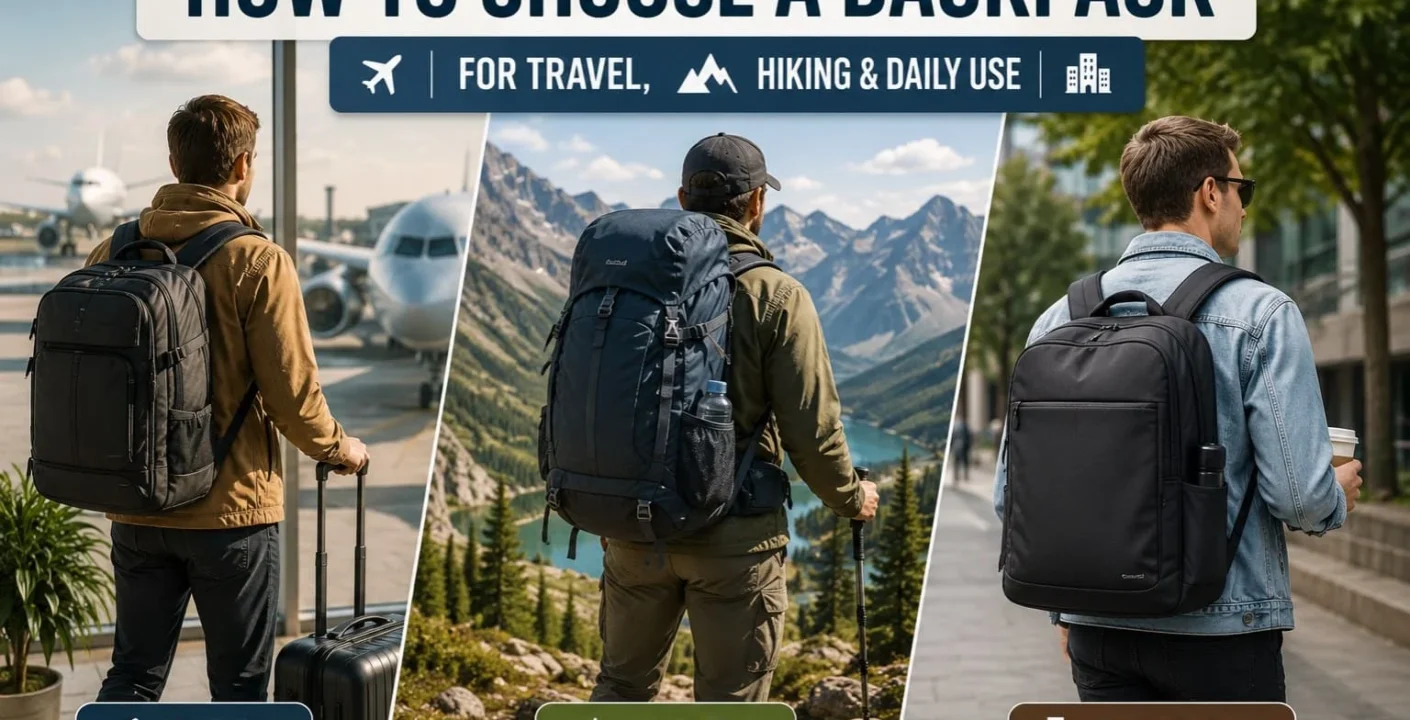
A good backpack is one of those purchases you barely think about until you’re stuck with the wrong one, straps digging into your shoulders, a laptop sliding around unprotected, or a zip that gives up on day two of a trip. The right backpack, on the other hand, disappears on your back and quietly does its job for years.
The trouble is that “backpack” covers everything from a rugged mountain pack to a sleek work bag. This guide walks you through how to choose a backpack for travel, hiking, and everyday life, so you buy once and buy well.
Start With How You’ll Actually Use It
Before looking at brands or colors, be honest about your main use. A pack built for one job rarely shines at another.
- Hiking and the outdoors: A dedicated hiking backpack prioritizes a supportive frame, a padded hip belt, and weather resistance over style. The hip belt matters more than people expect; it shifts weight off your shoulders and onto your hips, where your body carries loads far more comfortably.
- Travel: A travel backpack usually opens like a suitcase rather than just from the top, making packing and finding things much easier. Look for lockable zips and a size that fits airline carry-on rules.
- Work and study: For commuting or campus, comfort and organization win. A quality laptop backpack for men or a laptop backpack for women should have a padded, suspended sleeve that keeps your device off the ground when you set the bag down.
- Every day and school use: A durable school backpack or kids’ backpack needs tough fabric, comfy straps, and enough room for books and a water bottle without becoming a back-breaker.
Matching the bag to the task is the single most important decision you’ll make.
Size and Capacity: Getting the Litres Right
Backpacks are measured in liters, and choosing the right capacity keeps you from overpacking or running out of room.
- 10–20L: Day trips, school runs, and commuting.
- 20–35 L: A versatile everyday and short-trip range and a sweet spot for a laptop backpack.
- 35–50L: Weekend getaways and carry-on travel.
- 50L and up: Multi-day hiking and serious expeditions.
When in doubt, slightly smaller is usually better; a half-empty huge pack tempts you to fill it with things you don’t need.
Fit and Comfort Come First
No amount of clever design makes up for a pack that doesn’t fit. Check the torso length, not your height; padded and adjustable shoulder straps; and a sternum strap to stop the straps from slipping. For heavier loads, a proper hip belt is non-negotiable. If you can, try the pack on with some weight in it before deciding.
Materials: Durability, Weight & Style
The fabric shapes how long your bag lasts, how it looks, and how it handles the weather.
- Nylon and polyester: Lightweight, water-resistant, and tough, they are the go-to for most hiking and travel backpacks.
- Leather: A leather backpack offers timeless style and ages beautifully, making it popular for work and smart-casual settings. It’s heavier and needs more care, but the durability and look are hard to beat.
- Canvas and cotton: A practical, comfortable choice for everyday bags.
Why Is Cotton Good for a Backpack?
Cotton, especially heavy cotton canvas, has been used for bags for generations, and for good reason. It strikes a nice balance between comfort, durability, and natural good looks. Here’s what makes it a strong choice:
- Breathable and comfortable: As a natural fiber, cotton feels soft against the body and won’t trap heat the way some synthetics do, a real plus on a warm day.
- Surprisingly tough: Cotton canvas is strong and abrasion-resistant, so a well-made cotton bag handles daily knocks without tearing.
- Holds color beautifully: It takes dye well, giving rich, long-lasting colors that don’t look cheap or plasticky.
- Natural look and feel: Many people simply prefer its relaxed, textured finish over shiny synthetic fabrics.
- Can be water-resistant: Treated or waxed cotton gains decent protection against light rain.
The trade-offs are weight and the fact that untreated cotton soaks up water, so for heavy rain or rugged trails a coated synthetic still wins. But for a stylish, comfortable, hard-wearing everyday bag, cotton is an excellent choice.
Organisation, Security & Features
Think about how you like to stay organized. Multiple compartments, internal pockets, and a dedicated laptop sleeve keep your gear tidy and easy to reach.
Security matters too, especially for travel and city commuting. An anti-theft backpack typically hides its zips against your back, uses slash-resistant fabric, and includes lockable closures, giving peace of mind in crowds. Other features worth weighing up include a rain cover, external water bottle pockets, and a luggage pass-through strap for travelers.
Style and Who It’s For
Practicality doesn’t mean sacrificing looks. A classic black backpack is endlessly versatile and hides scuffs and marks well. Many brands now design with specific users in mind; a ladies’ backpack or a backpack for ladies often features adjusted strap spacing and a frame shaped for a smaller torso, which genuinely improves comfort. The best-looking bag is the one that fits you well and suits your daily life.
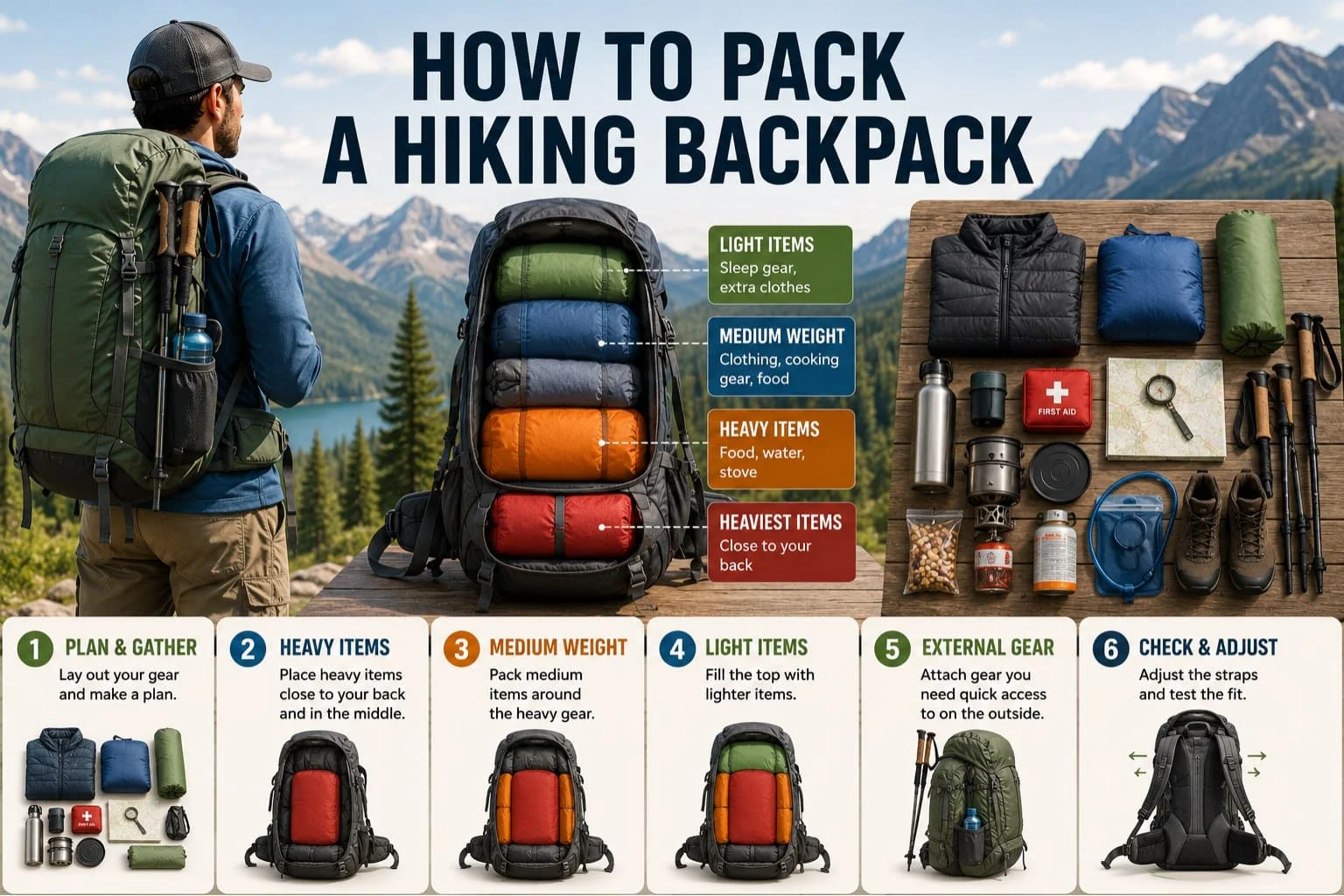
How to Pack a Hiking Backpack
How you pack your bag is almost as important as which bag you buy. Loading the weight in the right places keeps you balanced on uneven ground and saves your back over a long day on the trail. Think of your pack in zones and load it from the bottom up:
- Bottom zone, light and bulky: Pack soft items you won’t need until you stop, such as your sleeping bag. These cushion the base and aren’t dead weight at the top.
- Middle zone, heavy items close to your back: Place the heaviest things, food, water, and a stove, in the center and against your spine. Keeping weight centered here improves balance and reduces strain.
- Top zone, frequently used gear: Store things you reach for often, like a rain jacket, snacks, and your first-aid kit, so you’re not digging to the bottom.
- Pockets and lid, quick-access essentials: Keep your map, phone, sunscreen, and water bottle in the outer pockets and top lid for instant access without opening the main compartment.
Once loaded, tighten the compression straps to stop the contents shifting around. When you put the pack on, fasten the hip belt first so it carries the weight, then adjust the shoulder straps and sternum strap for a snug, comfortable fit.
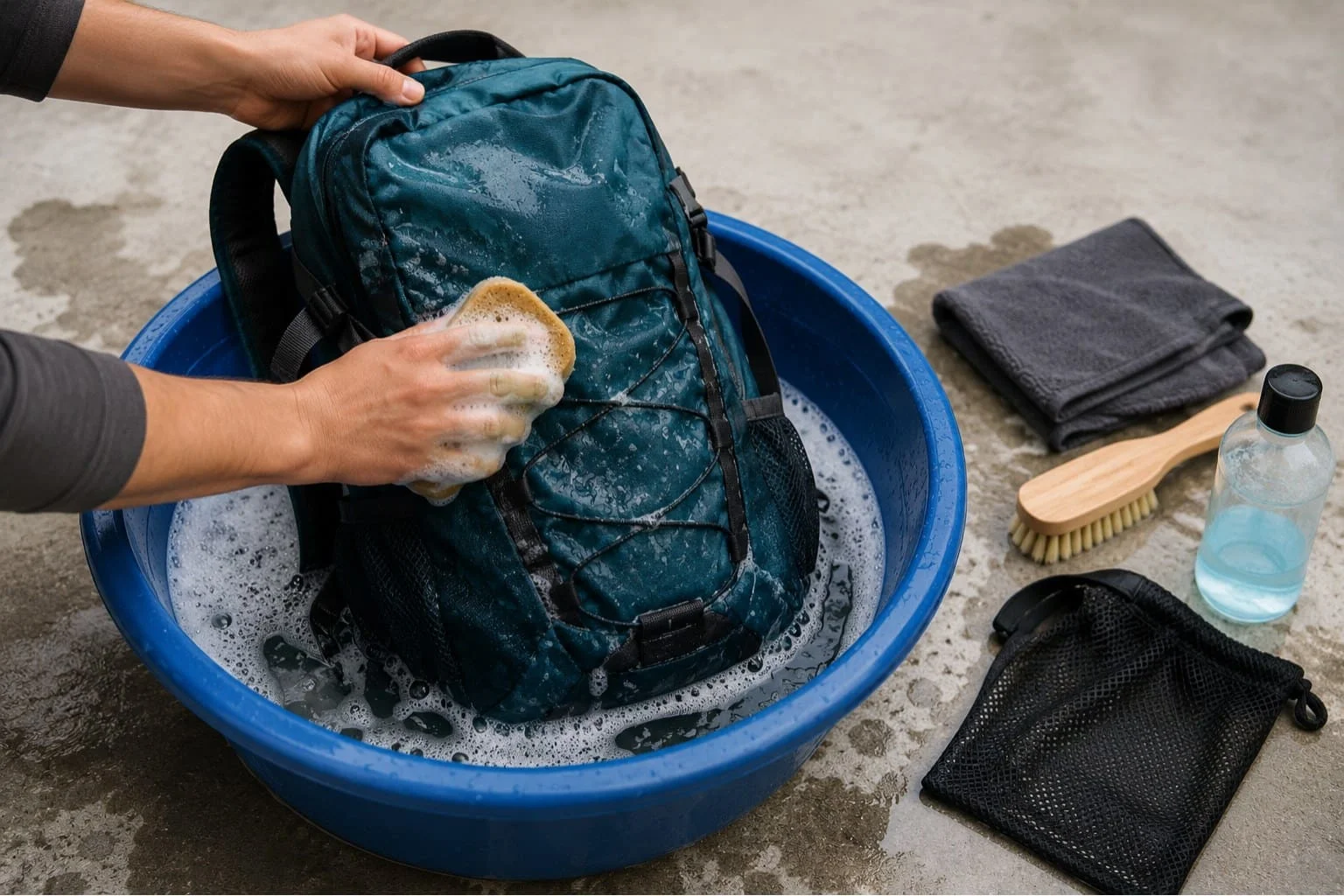
How to Wash a Backpack
A clean backpack lasts longer, smells better, and simply looks after itself. Most fabric packs don’t belong in a washing machine, as the spinning can damage frames, padding, and waterproof coatings, so a gentle hand-clean is the safe approach. Follow these steps:
- Check the care label: Always start here, as some materials need special handling.
- Empty and shake it out: Open every pocket, remove everything, and shake out crumbs and dust.
- Spot-clean the marks: Use mild soap and warm water with a soft brush or cloth, paying attention to the straps and the base where grime builds up.
- Hand-wash if needed: For a deeper clean, wash the whole bag in lukewarm water with a gentle detergent rather than using a machine.
- Rinse thoroughly: Make sure all soap is removed, as leftover detergent can stiffen the fabric.
- Never wring it out: Twisting can warp the frame and damage seams, so press out excess water gently instead.
- Air-dry it properly: Hang it upside down with the pockets open, away from direct heat or sunlight, until it’s completely dry.
Leather backpacks are the exception; never soak them. Simply wipe a leather backpack with a damp cloth and treat it occasionally with a dedicated leather conditioner to keep it supple and looking good.
Click to view the complete range of hiking backpacks