

Do Bulletproof Vests Really Work? Yes, Bulletproof vests do work, but only when the vest is made for the threat you are facing. A vest designed to stop a 9mm handgun round is not automatically strong enough to stop an AK-47 rifle round. This is why the word “bulletproof” can be misleading. In real terms, most vests are bullet-resistant, not completely bulletproof.
A quality bulletproof vest can reduce the chance of fatal injury by slowing the bullet, spreading the impact, and protecting vital organs. However, the protection depends on the vest level, material, plates, fit, and build quality.
For handgun threats, a kevlar bulletproof vest or soft ballistic vest may be enough. For rifle threats, you usually need hard bulletproof plates inside a plate carrier vest or tactical bulletproof vest with plates.
Before buying any body armour, always check what it is actually rated to stop.
The Reality Check – What a Bulletproof Vest Can and Cannot Do
A bulletproof vest can save a life, but it cannot make anyone invincible. It protects only the areas it covers, usually the chest, back, and sometimes the sides. The neck, face, arms, lower stomach, and legs are often exposed unless extra armour is used.
A police bulletproof vest is usually made for handgun protection and daily wear. It is lighter, more flexible, and easier to wear for long shifts. However, it may not stop rifle rounds unless it includes certified hard armor plates.
A vest can also fail if it is damaged, expired, poorly fitted, or made from low-quality materials. A fake bulletproof vest, fashion bulletproof vest, or tactical-looking black vest may look protective but offer no real ballistic safety.
The most important thing to understand is this: body armour reduces risk, but it does not remove danger completely.
Understanding How a Vest Stops a Bullet Without the Jargon
A vest stops a bullet by slowing it down and spreading its force over a wider area. It does not simply block the bullet like a wall. Instead, it absorbs and manages the impact.
Soft armor uses strong fibers such as Kevlar. When a bullet hits a kevlar vest, the fibers pull tight, catch the bullet, and spread the energy across the panel. This is why soft armor is commonly used against handgun threats like 9mm rounds.
Hard armor works differently. A tactical bulletproof vest with plates uses rigid armor plates made from materials such as ceramic, steel, polyethylene, or composite materials. These plates are designed to break, deform, or slow rifle rounds before they reach the body.
The material matters. A kevlar bulletproof vest may be useful against handguns, while rifle threats require hard bulletproof vest plates.
Can a Vest Stop an AK-47 Round?
Yes, a vest can stop some AK-47 rounds, but only if it has proper rifle-rated hard armor plates. A normal soft ballistic vest is not enough for this type of threat.
An AK-47 round is much faster and more powerful than a 9mm handgun round. This is why a level 3 bulletproof vest or rifle-rated plate system is usually needed for protection against common rifle ammunition.
Many buyers search for terms like bulletproof vest South Africa, bulletproof vest Cape Town, plate carrier South Africa, or bulletproof vest South Africa price. The problem is that some products look tactical but are only empty carriers. A plate carrier by itself is not bulletproof. The protection comes from the certified armor plates inside it.
If AK-47 protection is the goal, do not trust appearance. Check the plate rating, material, test proof, and manufacturer details.
Velocity vs Armor – Why AK-47 Is a Different Beast
The main reason AK-47 rounds are harder to stop is velocity. Rifle bullets move much faster than handgun bullets. That extra speed gives them more energy and better penetration.
A 9mm bullet can often be stopped by soft armor because it is slower and wider. An AK-47 round is different. It is faster, more pointed, and carries more force into the vest.
This is why bulletproof vest material matters so much. Kevlar is excellent for many handgun threats, but it is not enough for rifle protection. Rifle threats require ceramic, steel, polyethylene, or composite armor plates.
When Even Armor Starts to Fail
Even strong armour has limits. Armor can fail if the bullet is more powerful than the vest rating, if several shots hit the same area, or if the round hits near the edge of a plate.
Hard plates can also become damaged after impact. Ceramic plates, for example, may crack after stopping a rifle round. The outside may still look fine, but the internal structure can be weakened.
Soft armor can also lose performance over time. Heat, sweat, moisture, bending, poor storage, and age can damage the fibers. This is why body armour should be inspected regularly and replaced when needed.
Armor can also fail because of poor coverage. If a bullet hits a gap around the neck, side, shoulder, or lower abdomen, the vest may not help.
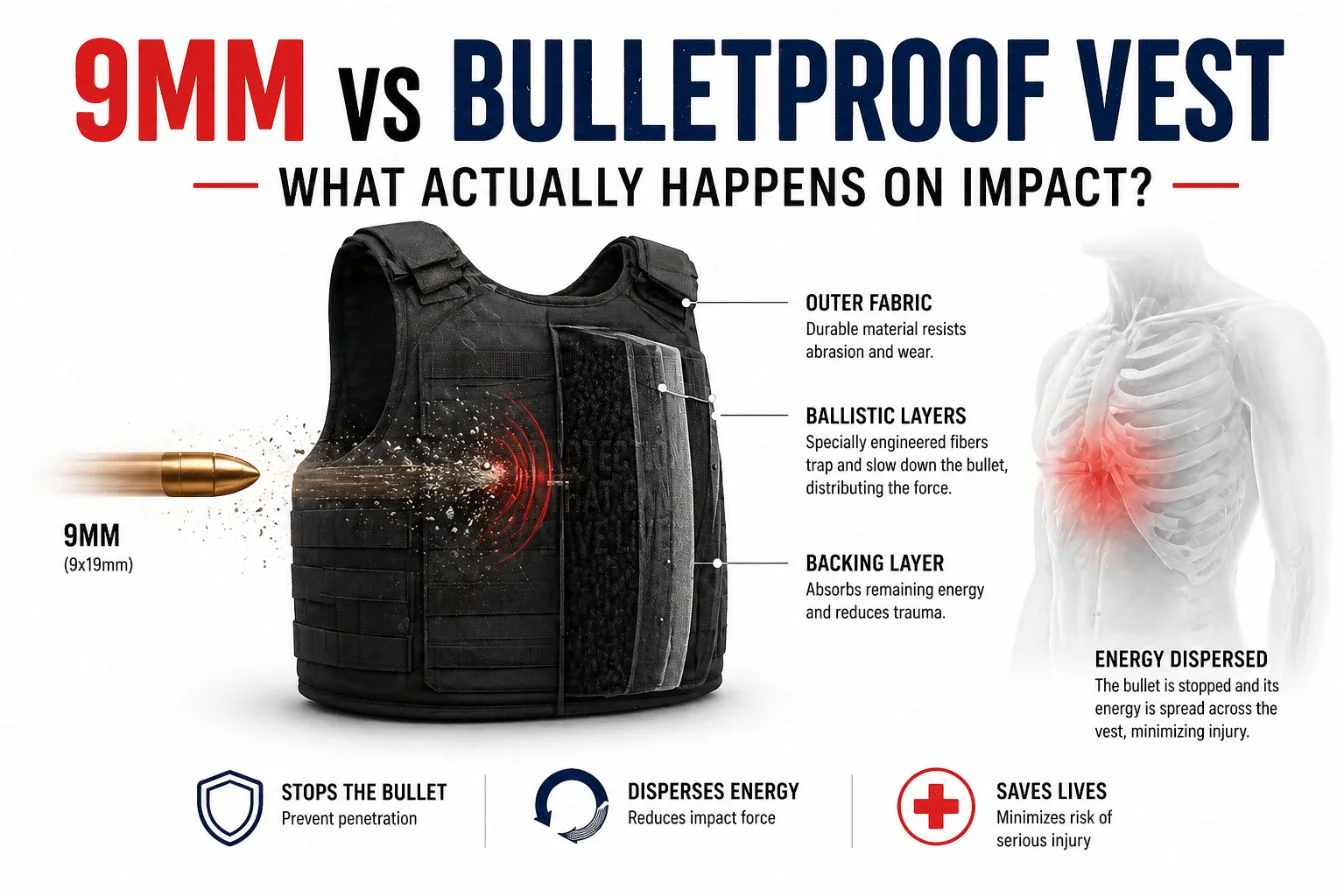
9mm vs Bulletproof Vest – What Actually Happens on Impact?
A 9mm round is one of the most common handgun threats. Many soft armor vests are designed to stop 9mm ammunition, depending on the vest level and testing standard.
When a 9mm bullet hits a ballistic vest, the fibers slow the bullet and spread the force across the vest panel. The bullet may flatten, stop, or become trapped in the armor layers.
However, the person wearing the vest may still feel a heavy impact. The bullet may not enter the body, but the force can still cause bruising, pain, swelling, or rib injury.
Soft Armor vs Handgun Rounds
Soft armor is usually the best option for handgun protection. It is lighter, flexible, and easier to wear than hard armor. This makes it useful for security guards, police officers, investigators, and people in high-risk jobs.
A light bulletproof vest can be worn under normal clothing. This is helpful when the wearer needs protection without drawing attention. An undershirt bulletproof vest or undercover bulletproof vest is often used for this purpose.
The limitation is clear: soft armor is not designed for rifle threats. It may stop 9mm and other handgun rounds, but it should not be trusted against AK-47 fire unless hard plates are added.
Blunt Force Trauma – The Hidden Risk
Blunt force trauma is one of the most overlooked dangers of body armour. It happens when the vest stops the bullet, but the impact force still pushes into the body.
This can cause deep bruising, cracked ribs, internal pain, or serious injury. A vest may stop penetration, but it cannot completely remove the force of the hit.
This risk is higher when the vest fits poorly, has no trauma padding, or is hit by a powerful round. Even a police bulletproof vest can leave the wearer injured after impact.
Not All Vests Are Equal – Types You Should Know
All vests are not the same. Some are real ballistic body armour. Some are only tactical vests for carrying gear. Some are made for fashion and do not provide real protection.
Online, you may see products described as bulletproof vest fashion, fashion bulletproof vest, black vest, tactical vest, military vest, or bulletproof jacket. These terms do not automatically mean the product can stop bullets.
A real ballistic vest should clearly show its protection rating, material, size, manufacturing details, and testing information. Without that, it should not be trusted as protective gear.
The main types of protection are soft armor, hard armor plates, concealable vests, and tactical plate carriers. Each one has a different purpose.
Soft Armor: Everyday Protection
Soft armor is made for everyday handgun protection. It is usually flexible and made from materials like Kevlar or similar ballistic fibers.
A kevlar bulletproof vest is often used by police, security workers, and people who need daily protection. It is easier to wear for long periods because it is lighter than hard armor.
Soft armor works well for many handgun threats, but it has limits. It is not the right choice for AK-47 protection unless it is combined with hard armor plates.
Hard Armor Plates: Rifle Protection
Hard armor plates are used for rifle protection. These plates are inserted into a plate carrier vest or tactical bulletproof vest.
Bulletproof plates can be made from ceramic, steel, polyethylene, or composite materials. Each type has benefits and drawbacks. Ceramic plates can stop strong rifle threats but may crack after impact. Steel plates are durable but heavy. Polyethylene plates are often lighter but can be thicker.
For AK-47 threats, hard armor is essential. A tactical bulletproof vest with plates offers much stronger rifle protection than soft armor alone.
Concealable vests are designed to be hidden under clothing. They are usually thinner, lighter, and better for daily wear. An undercover bulletproof vest is useful when the wearer needs protection without looking armed or tactical.
Tactical vests are designed to be worn openly. They may include plate pockets, straps, pouches, MOLLE webbing, side panels, and space for extra gear. A tactical vest South Africa or plate carrier South Africa product may be used by security teams, tactical units, or high-risk professionals.
Concealable vests are better for discreet handgun protection. Tactical plate carriers are better when rifle protection and extra equipment are needed.
Protection Levels Explained
Protection level tells you what type of ammunition the vest is designed to stop. This is one of the most important things to check before buying.
Lower levels are generally used for handgun threats. Higher levels are usually used for rifle threats. But buyers should be careful with vague marketing claims.
Some sellers use terms like bulletproof vest level 5 or bulletproof vest level 6. These may sound powerful, but they are not always tied to a recognized testing standard. Always ask what standard the level refers to and what ammunition was used during testing.
What Level II & IIIA Can Stop
Level II and Level IIIA armor are commonly linked with handgun protection. These vests are often made from soft armor materials and are used against threats like 9mm and other handgun rounds.
Level II may offer lighter protection, while Level IIIA usually provides stronger handgun resistance. This is why many police bulletproof vest models and security bulletproof vest options use soft armor in these categories.
What You Need for Rifle Threats: Level III & IV
Rifle threats require hard armor. Level III and Level IV plates are commonly used for rifle protection.
A level 3 bulletproof vest or plate system may protect against certain rifle rounds, depending on the exact plate and ammunition. Level IV plates are generally used for stronger rifle threats, including some armor-piercing rounds.
For AK-47 protection, the vest must include rifle-rated armor plates. A tactical-looking vest without plates will not provide rifle protection.
Multiple Shots & Armor Fatigue
Armor is not unlimited. Multiple shots can damage both soft armor and hard plates.
Soft armor may weaken if several rounds hit close together. Hard plates may crack, deform, or lose strength after impact. This is especially important with ceramic plates, which can suffer internal damage even when the outside looks normal.
Armor fatigue can also happen through daily use. Sweat, heat, storage conditions, folding, and rough handling can reduce performance over time.
For this reason, body armour should be checked regularly. If panels are damaged, plates are cracked, or stitching is failing, the gear should be replaced.
Who Should Actually Use Bulletproof Vests?
Bulletproof vests are useful for people who face real safety risks. They are commonly used by police, military teams, security guards, cash-in-transit workers, bodyguards, journalists in dangerous areas, and some high-risk professionals.
Not everyone needs a vest. The decision should be based on actual threat level, not fear, fashion, or appearance.
A kevlar suit, ballistic vest, bulletproof jacket, or tactical vest should match the user’s job and risk. A person facing handgun threats needs different protection from someone facing rifle threats.
The best vest is not always the heaviest or most expensive one. It is the one that fits the threat, the body, and the situation.
Security & Law Enforcement
Security and law enforcement users often need reliable protection because they may face dangerous situations during daily work.
A police bulletproof vest is usually designed for comfort, mobility, and handgun protection. Officers may wear soft armor every day and use hard plates during high-risk operations.
For these users, the vest must be comfortable enough to wear for long hours and strong enough for the expected threat.
Civilians & High-Risk Professions
Some civilians may need body armour because of their work or environment. This can include journalists, private investigators, VIP protection staff, emergency workers, and people transporting valuables.
Civilian buyers should be careful not to confuse fashion with protection. A fashion bulletproof vest, black vest, or streetwear-style vest may look strong but may not stop bullets.
Before buying, civilians should check local laws, product certification, and seller credibility. This is especially important when searching for bulletproof vest South Africa, plate carrier South Africa, or tactical vest South Africa products.
Threat Level First, Not Price
Price matters, but it should not be the first deciding factor. The first question should always be: what threat do you need protection from?
If the concern is 9mm, soft armor may be suitable. If the concern is AK-47, hard rifle plates are required. If the vest needs to stay hidden, an undercover bulletproof vest or undershirt bulletproof vest may be better. If the threat is serious and visible gear is acceptable, a tactical plate carrier may be the right choice.
Comfort vs Protection Trade-Off
More protection often means more weight. A lightweight bulletproof vest is easier to wear but may not protect against rifle rounds. A military tactical bulletproof vest with plates may offer stronger protection, but it can be heavy, hot, and restrictive.
Comfort matters because armor only works when it is actually worn. If a vest is too uncomfortable, the user may stop wearing it.
The right choice depends on the situation. For daily handgun risk, soft armor may offer the best balance. For rifle threats, hard armor plates are necessary even if they are heavier.
Click to view the complete range of Bulletproof vests for Self-Defense.